CULTURE · 2026-08-16
Flower Tteok: Hwajeon and Modern Cafe Dduk
By Dduk Curator
Pan-fried flower cakes and cube-tteok boxes — dduk's cafe era without losing its ritual memory.
TL;DR
Pan-fried flower cakes and cube-tteok boxes — dduk's cafe era without losing its ritual memory.
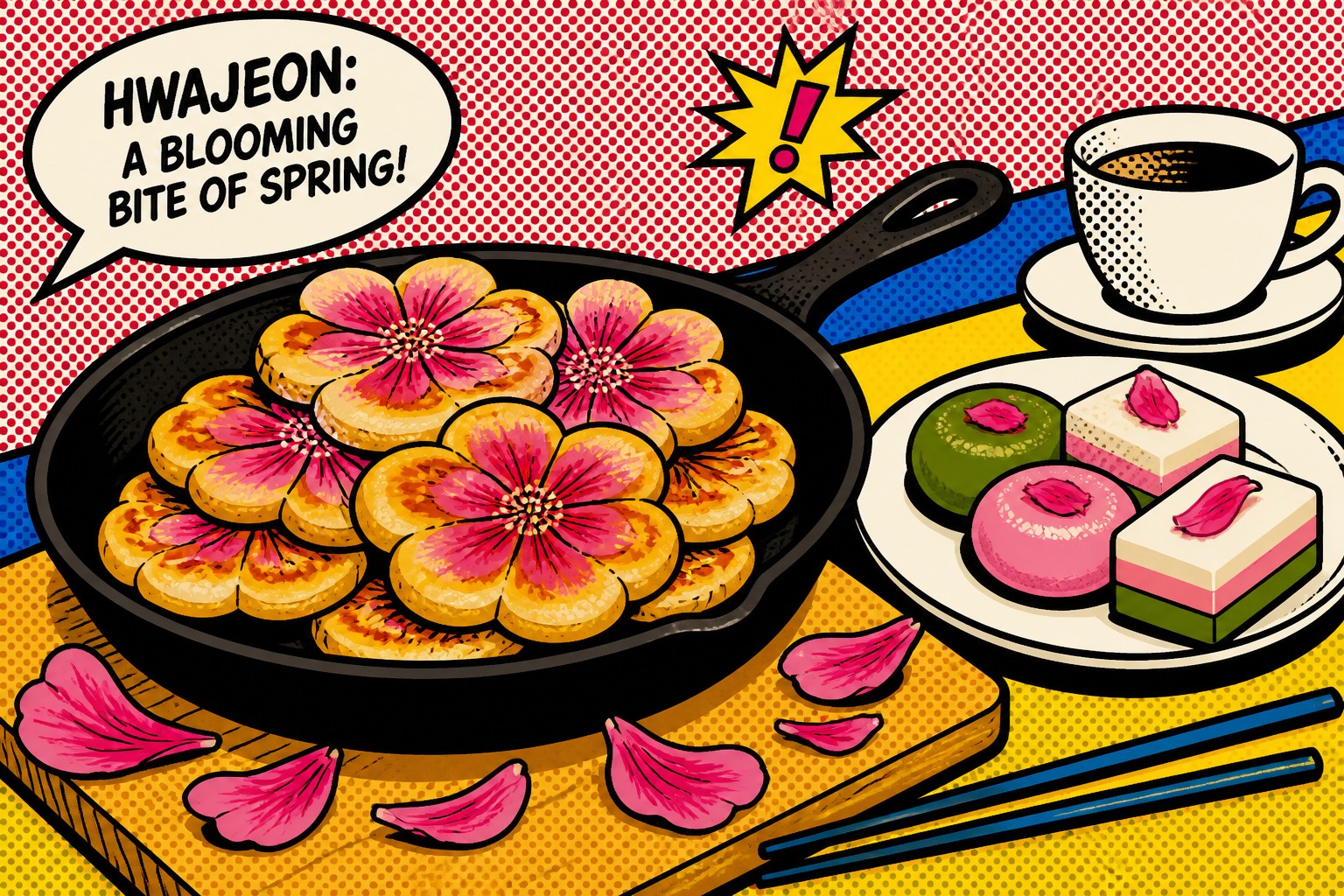
Hwajeon is the spring flower dduk: glutinous rice dough pressed thin, topped with azalea or rose petal, pan-fried in sesame oil until edges crisp and honey drizzled. It is the most delicate dduk — eaten within hours, not stored, because crisp leaves turn leathery.
Cafe dduk widened the format: cube tteok (neemo-tteok) in pastel boxes, ang-batter sandwiched cream tteok, and fruit-topped sulgi sold by the slice. They borrow mochi and wagashi plating while keeping chapssal chew — popular with younger eaters who meet dduk through Instagram before a Chuseok table.
Technique note: pan-fried hwajeon needs low-medium heat so petals do not scorch and dough stays pliable; cafe cube tteok needs cold rice flour work and silicone molds for sharp edges, opposite of hand-cut heritage aesthetics. Both are valid crafts, different tools.
Serve pairing: hwajeon with omija tea (five-flavor berry tea) whose sour lifts the honey; cafe tteok boxes with black sesame latte or roasted bean powder milk for echoing nuttiness. Beverage pairing does heavy lifting for sweets this subtle.
If you sell both, keep them separate conceptually: hwajeon as seasonal, no-reservation, day-of-only; cafe boxes as pre-order with choice of 4 flavors. Mixing them confuses shelf life and expectations.
Across the Kimchee Network
More from the Kimchee Network