RECIPES · 2026-08-14
Mugwort and Mujigae: Color, Herb, and Rainbow Layers
By Dduk Curator
Ssuk-tteok and mujigae-tteok teach natural color and seasonal herb logic — how to scent and tint without artificial dyes.
TL;DR
Ssuk-tteok and mujigae-tteok teach natural color and seasonal herb logic — how to scent and tint without artificial dyes.
Ssuk (mugwort) is Korea's definitive spring herb for tteok, lending pine-eucalyptus aroma and natural deep green. Blanch fresh mugwort 60 seconds, shock, squeeze brutally dry, mince, and fold into dough; powdered mugwort needs blooming in warm water to lose its dustiness.
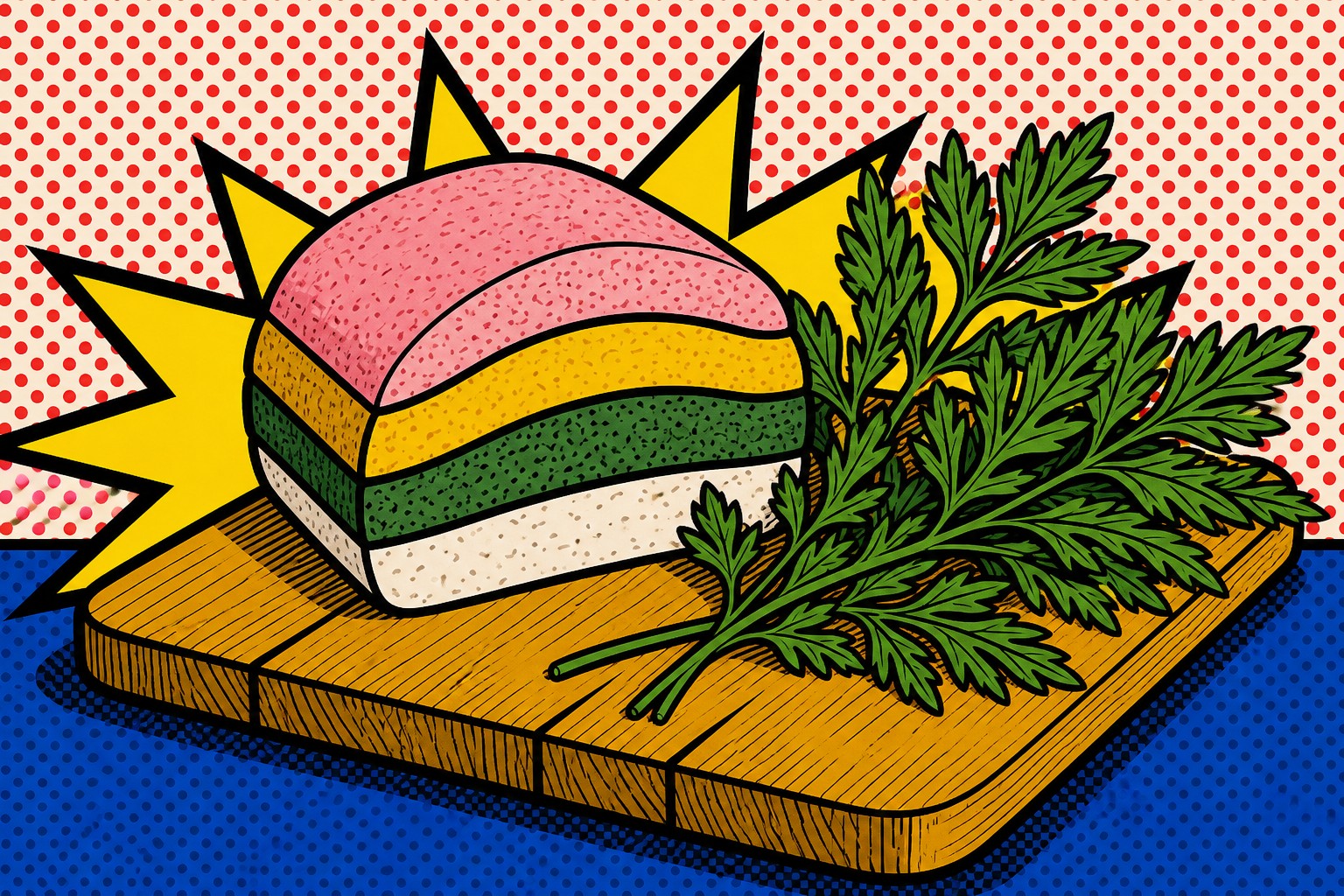
Mujigae-tteok (rainbow tteok) layers 4–5 colors in a siru: white, mugwort green, pumpkin yellow, and a beet or cactus pink. Layer gently, do not press; steam 30 minutes undisturbed so colors stay feathery at the seams instead of muddying. The cross-section is the presentation — cut to show strata.
Tints beyond mugwort: kabocha for yellow, omija berry for mauve, gardenia seed for deeper yellow, and roasted soybean itself for tan. All are traditional and subtle — modern bakers leaning neon are choosing cafe aesthetics over heritage accuracy, which is fine if labeled modern.
Balance bitterness. Mugwort can turn bitter if over-measured; keep ssuk at 3–4% of flour weight for fragrant, not medicinal. Sweeten slightly more than a plain baekseolgi (add 10g extra sugar per 300g flour) to compensate for the herb's edge.
Steam scent is part of flavor: laying mugwort sprigs or pine beneath the siru cloth perfumes the cake as it sets. Open the lid away from your face to avoid drip; rest 10 minutes draped with cloth before cutting so the cut stays clean without crumbling.
Across the Kimchee Network
More from the Kimchee Network