RECIPES · 2026-08-10
Savory Dduk: Garae-Tteok and Tteokguk Techniques
By Dduk Curator
New Year's soup is not nostalgia — it is a technique for cooking rice cakes that stay tender in broth without sloughing.
TL;DR
New Year's soup is not nostalgia — it is a technique for cooking rice cakes that stay tender in broth without sloughing.
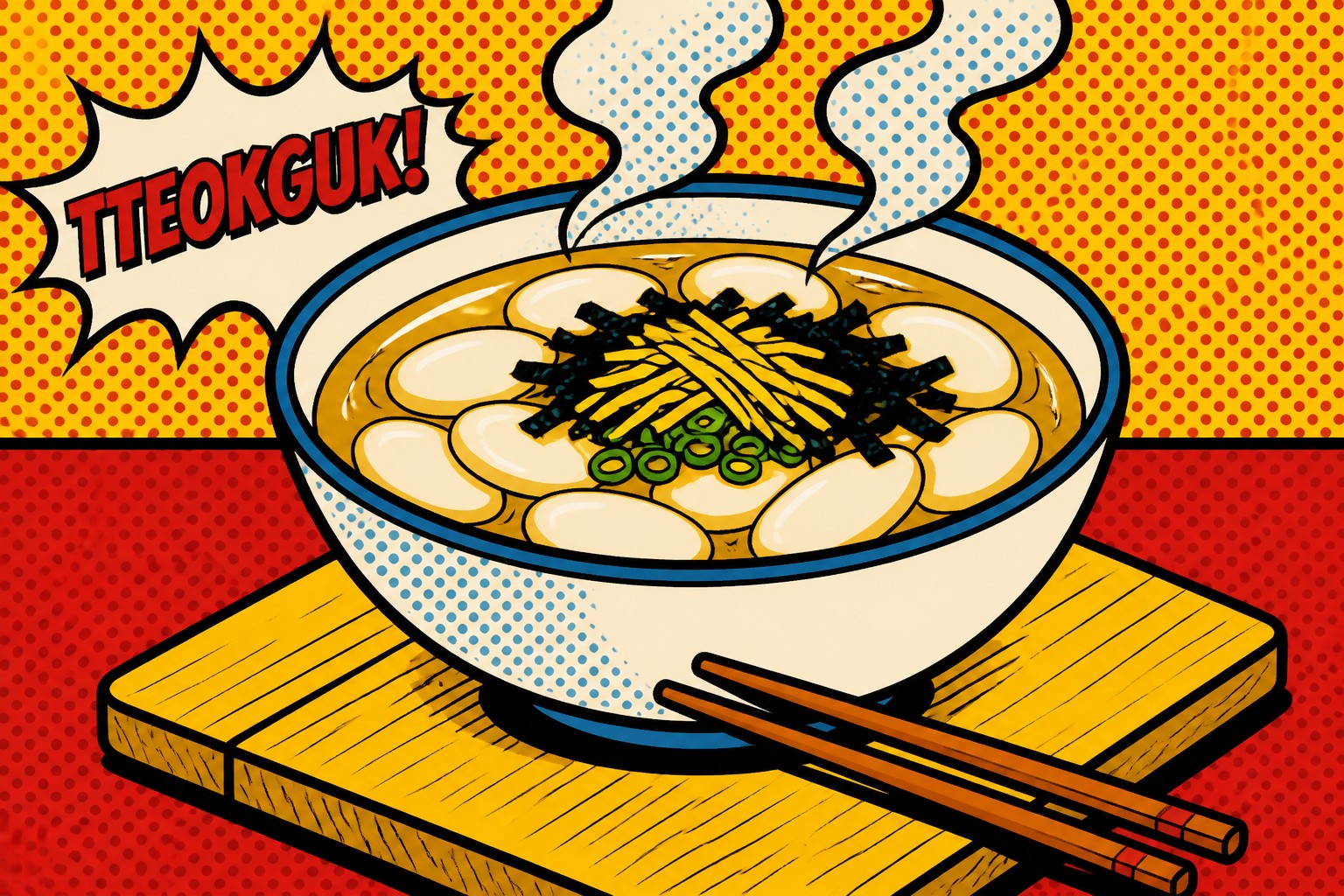
Tteokguk is garae-tteok sliced oval (tteokguk-tteok) simmered in clear broth until it floats and swells. Cut uniform 5 mm ovals on a bias so they cook evenly; soak 10 minutes if refrigerated, 25 if frozen, and add to a gentle simmer not a hard boil that shreds edges.
Broth matters as much as tteok. Classic uses beef bone or anchovy-kelp stock with a spoon of saeujeot for salinity; royal versions use slow beef brisket with jidan garnish and laver. Keep broth clear — cloudy broth masks the rice cake's own milky sweetness.
Stir gently once. Tteokguk wants a soft boil where ovals lazily tumble; aggressive stirring breaks them into porridge. Pull when they puff and float plus one minute — they continue swelling off-heat. Too long and they burst and thicken your clear soup into unintended juk.
Modern bowls add mandu, egg, or cheese, but the test of technique is the tteok itself. It should be tender through, not chalky white at the core, and hold its oval without fraying. That is the siru-and-pounding quality you paid for, revealed by soup.
Serve with yangnyeom: soy plus sesame oil plus pepper for dipping, plus gim crumble on top. The condiment lets each eater tune salt without over-salting the communal pot — community and individual taste held together.
Across the Kimchee Network
More from the Kimchee Network