SCIENCE · 2026-08-09
The Science and Art: Glutinous vs. Non-Glutinous Rice
By Dduk Curator
Chapssal vs. mepssal — amylopectin levels explain chew, collapse, and how to rescue a failed batter.
TL;DR
Chapssal vs. mepssal — amylopectin levels explain chew, collapse, and how to rescue a failed batter.
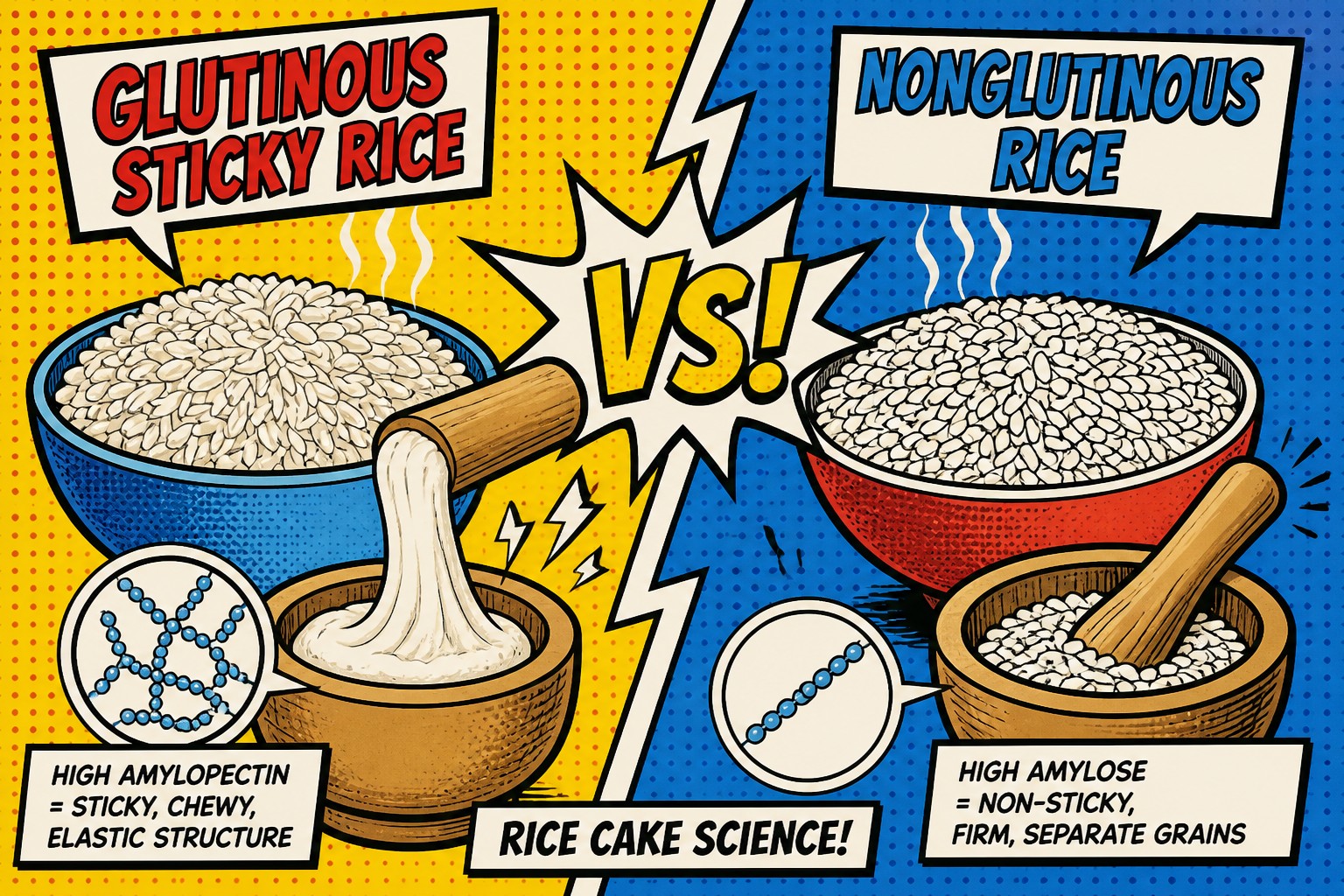
Glutinous rice (chapssal) is not gluttonous — it contains almost entirely amylopectin, a branched starch that traps water and stays elastic after cooking; non-glutinous rice (mepssal) blends amylopectin with amylose, which firms, slices cleanly, and resists stretch. That ratio dictates whether your dduk stretches or snaps.
Pure chapssal gives injeolmi and chaltteok their pillowy pull; pure mepssal gives garae-tteok and jeungpyeon their sliceable firmness. The art is blending: 70% mepssal + 30% chapssal for songpyeon that holds shape but still chews tenderly; ratio is the recipe.
Water is the other variable. Too much water in a siru batter steams cottony and collapses on cooling; too little bakes dry and cracks. Weigh everything: rice flour 300g to 180–200 ml water is a common starting hydrology, then adjust by 10 ml increments per humidity day — yes, weather matters.
Pounding aligns starch. Whether hand-chigi or machine, 8–12 minutes of folding and pounding at 65–75°C gelatinized temperature builds the network that gives garae its spring. Under-pounded dduk tears and looks ragged; over-pounded at too low temp goes rubbery.
Rescue logic: cracked siru? Steam 2 minutes longer covered. Slack, wet batter? Add 10% dry flour dusting and re-steam. Dense, jaw-heavy bite? You overdid chapssal or under-steamed; next time cut chapssal by 10% and extend pounding 2 minutes.
Across the Kimchee Network
More from the Kimchee Network