METHODS · 2026-08-17
Storage: Freezing and Re-Steaming Without Ruin
By Dduk Curator
Dduk stales faster than bread — how to freeze, thaw, and re-steam so second-day dduk eats like morning-made.
TL;DR
Dduk stales faster than bread — how to freeze, thaw, and re-steam so second-day dduk eats like morning-made.
Cooked dduk retrogrades aggressively because chapssal amylopectin re-crystallizes as it cools. Room-temp shelf life is 8–12 hours before firming; refrigeration accelerates staling, the opposite of most foods — freeze, don't fridge, if you need more than a day.
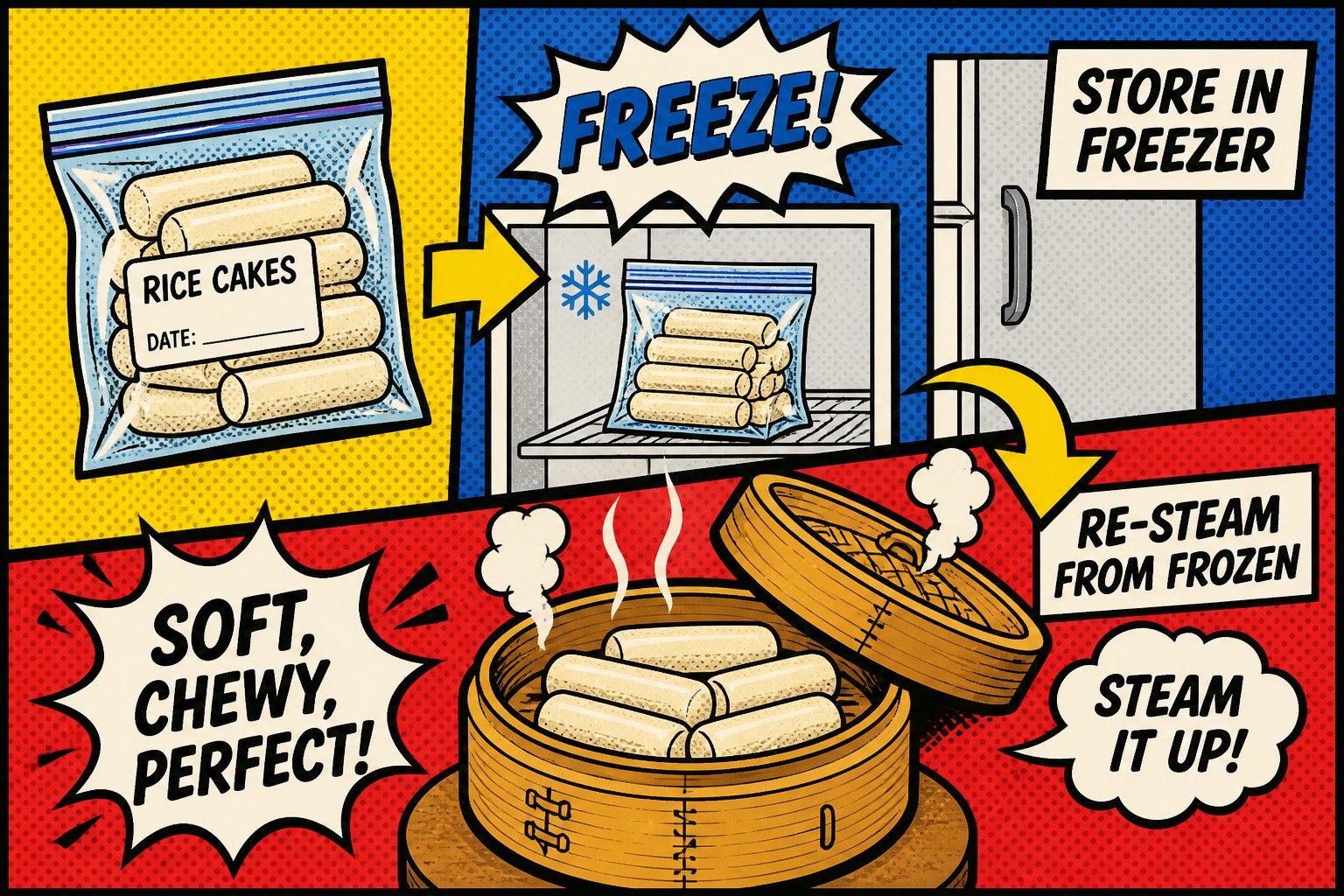
Freeze properly: cool fully 30 minutes, then wrap pieces individually in plastic plus a zip bag with air pressed out; whole siru layers wrap tight then box. Frozen dduk keeps 3–4 weeks before freezer aroma intrudes; label by type because lookalikes freeze identically.
Re-steam is the only respectable reheat. Thaw 10 minutes, then steam 6–8 minutes over brisk boil with a cloth-wrapped lid to catch drip. Microwaving works in a pinch with a damp paper towel for 20-second bursts, but steam restores elasticity more evenly.
Sauce-served dduk is an exception. Garae-tteok for tteokguk can go frozen directly into simmering broth with 2 minutes extra time; its very mild flavor makes it more freezer-tolerant than sweet injeolmi, whose bean powder goes soft after thaw.
For catering, steam final batches the morning of. If you must prep a day ahead, freeze par-steamed blanks and finish-steam on site; that two-stage approach preserves shape under transport where fully finished dduk would deform. Your guest eats steam heat, not storage time.
Across the Kimchee Network
More from the Kimchee Network