RECIPES · 2026-08-11
Sweet Dduk: Injeolmi, Songpyeon, and Modern Fillings
By Dduk Curator
Bean powder, honey, and pine — sweet dduk covers ritual and dessert without ever needing icing.
TL;DR
Bean powder, honey, and pine — sweet dduk covers ritual and dessert without ever needing icing.
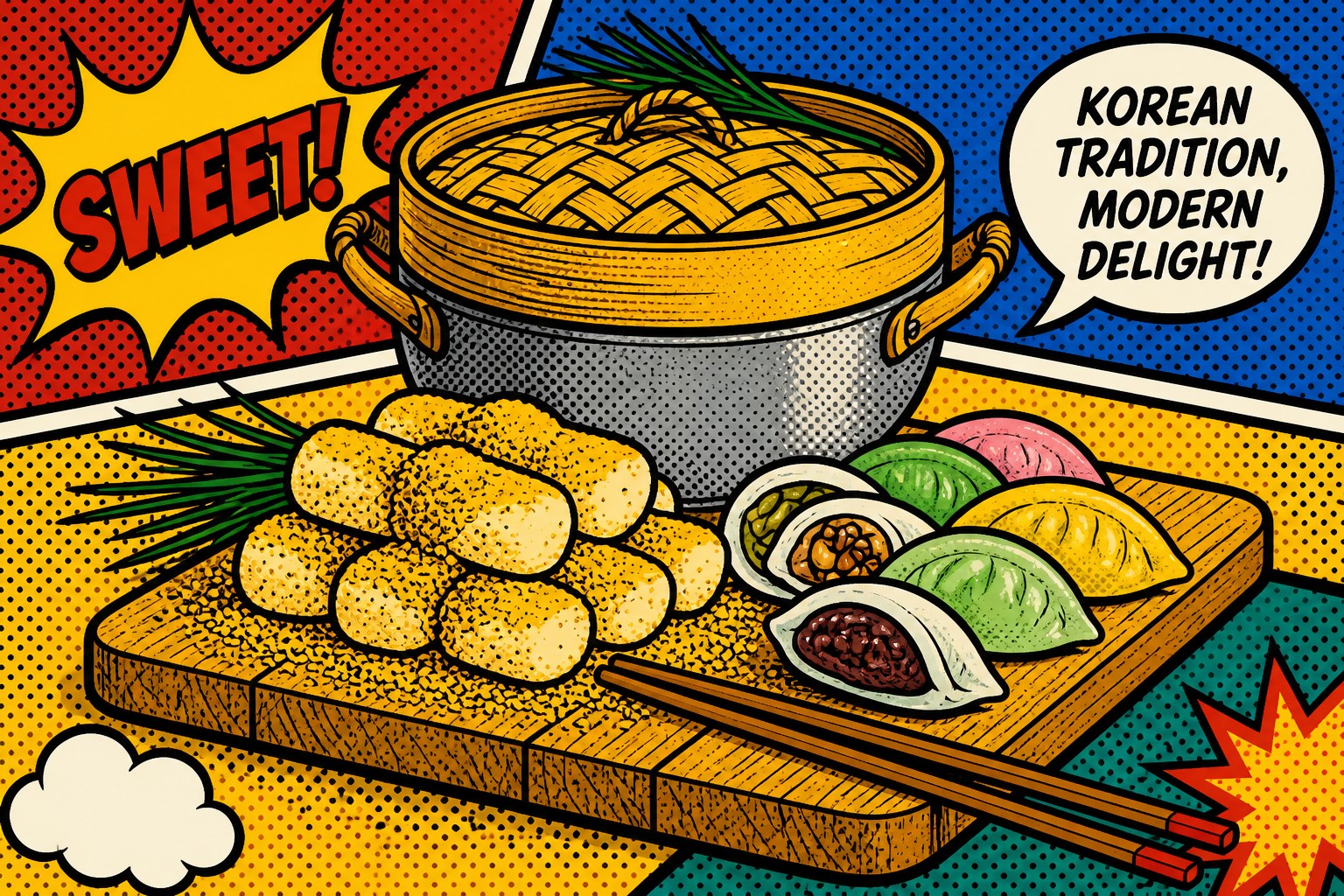
Injeolmi is pounded chapssal coated in roasted soybean powder (kong-garu). Pound while hot, cut into rectangles, toss generously — the powder prevents sticking and adds nutty aroma that honey alone cannot. Eat within a day; injeolmi stales faster than any siru cake because of its open crumb.
Songpyeon is the Chuseok half-moon where pine needles scent the steamer. Fill with sweetened sesame or chunky bean, seal tightly so no leak browns the dough, and steam on pine or parchment 12–15 minutes. The thin skin should be translucent not opaque; opaque means under-steamed.
Sweetness scale: classic uses honey or jocheong, not granulated sugar, for floral viscosity. For modern palates, black sesame, mugwort, or yuzu fillings nod to cafe dduk without moving to mochi's anko center — keep filling below 30% of weight so dduk still tastes like rice, not candy.
Wrapping is a learned hand skill: press a 30g dough ball into a 5 cm cup, fill 1 tsp, pinch 3 times, taper ends. Kids learn beside elders because the gesture carries memory — Chuseok kitchens teach through doing, not recipes.
Store sweet dduk with a damp towel, not plastic alone. Plastic traps condensation and makes injeolmi powder slimy; a towel plus container keeps humidity balanced for 24 hours before you freeze or re-steam.
Across the Kimchee Network
More from the Kimchee Network