CULTURE · 2026-08-08
What Makes Korean Dduk Distinct from Mochi
By Dduk Curator
Same rice, different technique — dduk is steamed and pounded; mochi is pounded wetter, softer, and filled differently.
TL;DR
Same rice, different technique — dduk is steamed and pounded; mochi is pounded wetter, softer, and filled differently.
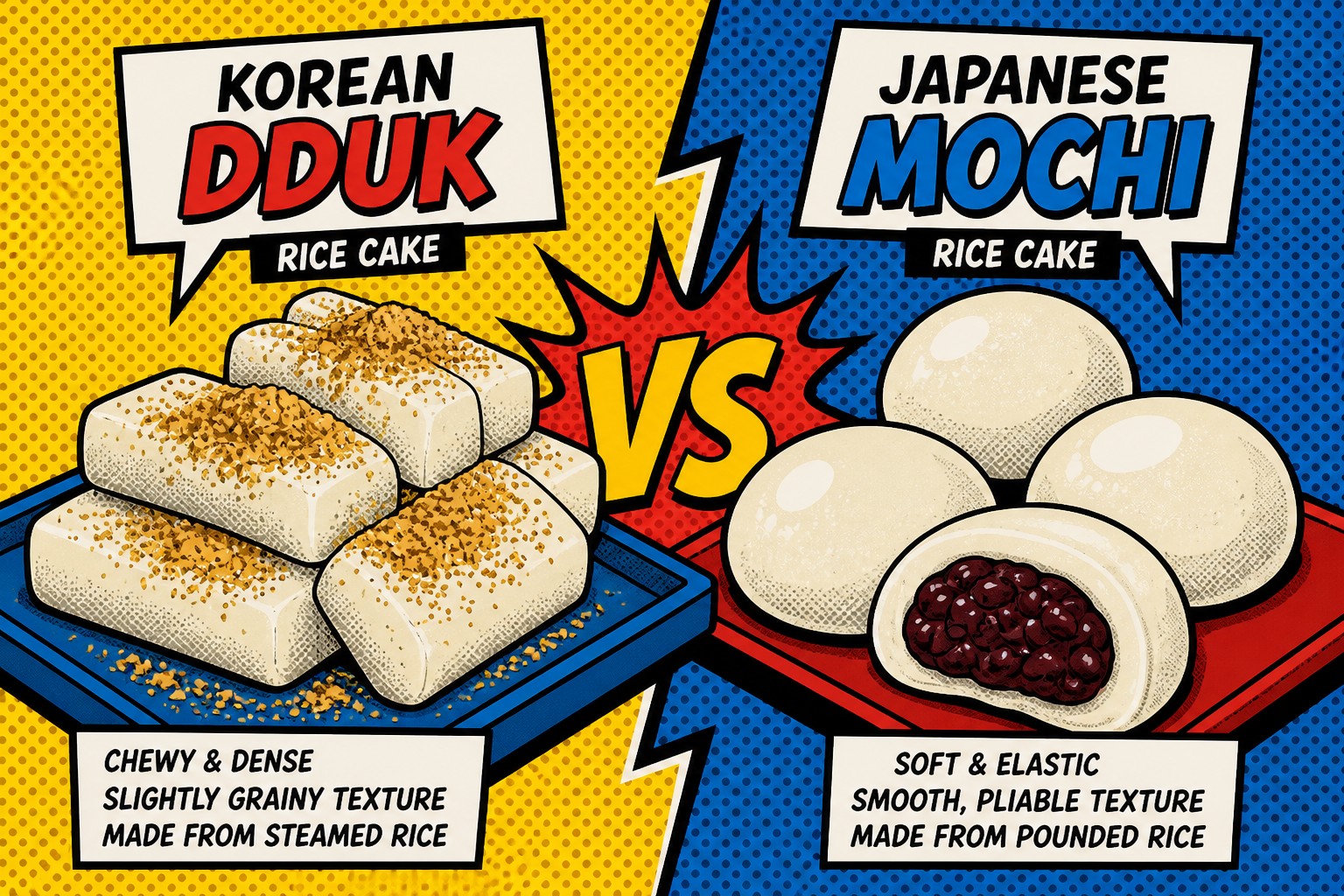
Korean dduk and Japanese mochi share a root: glutinous rice made elastic through heat and force. The split is technique: dduk is typically steamed in a siru and then pounded or kneaded (chigi) into a denser, slightly drier crumb; mochi is steamed and pounded wetter while very hot into a stretchier, more tender pull with higher moisture.
That moisture gap drives use: dduk appears as standalone pieces (injeolmi, garae-tteok, songpyeon) meant to be cut, grilled, or simmered; mochi tends toward filled daifuku where the skin wraps anko or ice cream. Exceptions abound — chaltteok resembles mochi closely — but the center of gravity differs.
Flavor grammar also differs. Dduk favors kong-garu (roasted bean powder), jujube, mugwort, and pine needle scent from steaming; mochi favors kinako, kuromitsu, and an-sweetened beans. Both love sesame, but Korean samsae often pairs with honey and jocheong (grain syrup) rather than refined sugar.
History diverged in context: Korean court and village calendars tied dduk to lunar rites and labor — Garae-tteok for Seollal soup, songpyeon for Chuseok — while mochi calendars tied to Oshogatsu Kagami and Buddhist temple labor. Similar physics, different ritual load.
Modern bakeries borrow both, and that is fine — just label honestly. Call stretchy filled sweets mochi-style; call steamed-and-cut heritage cakes dduk. Precision respects both traditions and helps shoppers who need the right texture for tteokguk vs. daifuku.
Across the Kimchee Network
More from the Kimchee Network